Thanks for stopping by. This blog features a collection of posts related to my work in, and thoughts about, strategic communication and academe as well as a handful of stories about my personal life. Any views expressed on this site are mine and likely do not reflect those of my employer. But honestly, there’s nothing all that controversial here, so don’t get your hopes up.
I believe that there are two tenets shaping the contemporary strategic communication industry: The first is a recognition that the human psyche—and its associated drives, desires, and biases—continues to operate through an ancient architecture that directs information processing, attitude formation, and behavior. The second is that the means by which strategic messages are best delivered are rapidly evolving. Consequently, the most influential strategic messages tend to be those which are informed by behavioral insights and disseminated through audience-appropriate channels and sources.
The proliferation of books, articles, blogs, and social media commentary related to insights and strategic communication can make connecting principles of behavioral research to strategic communication practice seem like an impossible task, but I’ve found the following frameworks to be highly useful throughout my academic and applied work:
Maslow’s Hierarchy of Needs Originally developed to understand what drives people to act in particular ways, Maslow has become foundational to both psychologists and rhetoricians alike. Ernest Dichter, widely credited as the first practitioner to apply principles of psychoanalysis to advertising, noted that humans are driven by the desires of personal growthand self-actualization, which is really just a way of thinking about moving from the bottom of Maslow’s Hierarchy toward the top.
Cialdini’s Principles of Persuasion Psychologist Robert Cialdini’s influential work on persuasion identifies six ways in which people can be influenced (i.e., consistency, reciprocity, authority, scarcity, social proof, and liking). Appropriately applying some combination of these principles to strategic communication is one of the best ways of increasing the probability of a communicator’s success.
Kenrick and Griskevicius’s Seven Sub-Selves Douglas Kenrick and Vladas Griskevicius’s application of evolutionary psychology to behavioral economics is particularly useful to understanding some common cognitive biases as well as the importance of priming. As these authors point out, seemingly irrational behavior (e.g., loss aversion, risk taking, et al.) can oftentimes be explained by considering the evolutionary goals of our species (i.e., self-protection, disease avoidance, alliance building, status building, mate acquisition, mate retention and care of kin). Those evolutionary goals can also be used to inform the development of both strategic plans and tactical messages for certain products and services.
Discussing and learning about strategic communication is near the top of my list of favorite things to do, so please don’t hesitate to connect with me if you’d like to chat or have a book to recommend. If you’re looking for someone to help you move, answer questions about yoga, or invest in your pyramid scheme, I’m not your guy.
Brands aren’t heroes. They don’t wear tights and capes. They don’t rescue women and children from runaway trains. They don’t fight the good fight. People don’t line the streets and salute them as they parade by. Yet there exists a litany of essays and other industry commentary suggesting they are heroic, kind, just, and any other number of aspirational human traits. Brent Coker’s September article published by Harvard Business Review is the most recent I’ve read and will here serve as a proxy for critique. It represents fantasy at best and marketing malpractice at worst.
In the beginning
To begin, Coker’s summary states that “Brands can create meaningful awareness by embodying heroic qualities—acting as guardians against injustice, prioritizing others’ needs selflessly, and serving as mentors and role models,” and “As brands increasingly take on roles akin to social activists, their power and responsibility to contribute positively to society become paramount, shifting from traditional CSR to authentic societal betterment.”
The suggestion that people somehow anthropomorphize brands—that is, think of them as heroes, caregivers, activists, or any other number of human archetypes—isn’t a new idea. But it is one that’s pretty easily refuted by a review of existing commentary and scholarship.
Take for instance Les Binet and Sarah Carter’s observation that,
“Words like ‘love,’ ‘passion,’ and ‘loyalty’ litter social media briefs and brand plans. It’s not enough for people to buy our products: we want ‘relationships’ with them. A lot of this talk is metaphorical. But too many people take the relationship analogy literally. That’s not just nonsense. It’s dangerous nonsense.”
Another oft-cited observation from former Mars Global CMO Bruce McColl is that
“(M)ost people out there buying our brands don’t love us…(I)t’s hard enough to have relationships with real people…in your life; your family and friends. How much time do you have to really connect with them? To ask consumers on mass to have that kind of relationship with brands is one step too far.”
And Byron Sharp, who has produced some of the most influential marketing scholarship of the last two decades, has refuted the idea of taking too literally the idea of a brand being an actual hero, writing
Brands should be good corporate citizens, but the idea of turning them into saints is nuts. It’s also unimaginative. These are the sort of marketing campaigns that high school students come up with for their term papers. Showing the brand saving the world is sweet, but naive, and hardly original.
Arguably, there are people who work in marketing who actually do love brands and think about them as if they’re heroes; brands do, after all, pay the bills and put food on the table for some of us. But outside of the industry, nobody cares much or thinks much about the vast majority of brands. People don’t need their face wash, candy bar, or car to be their knight in shining armor. Both common sense and available research make this readily apparent. Unfortunately, what should be settled law in our field is instead willfully disregarded or ignored altogether.
Brand devotees
Certainly there are some brands that inspire devotion—and maybe even beliefs of heroism—among a subset of their most frequent buyers or those who wish they had the means to be buyers of out-of-reach luxury items. But these consumers are the exception to most of a brand’s buyers and represent little to no opportunity for meaningful business growth.
Binet and Carter noted that,
“Contrary to marketing’s relationship desires, most of us want brands to make our lives a bit easier. Then get out of the way. Few people want real, human relationships with brands. When they do, they’re usually seen as immature (teenagers obsessing over pop stars) or weird (people with Harley-Davisson tattoos).”
Further, Sharp has extensively written and spoken about the dangers of brands focusing their communication too narrowly on their most devoted fans and users, pointing out that growth lies largely in building mental availability among occasional users and non-brand category users.
Some context around those impressions numbers
As evidence of the power of brand-as-hero, Coker cited a Domino’s pizza campaign he described as a “runaway success” that received “more than 1 billion media impressions in its first eight months alone.”
Though 1 billion impressions is exponentially more than most brand-created social media content gets, it’s far less impressive in the context of Dominos’ overall marketing budget. The company’s 2023 Annual Report noted that, “Over the past five years, our U.S. franchise and Company-owned stores have invested an estimated $2.7 billion in national, co-operative and local advertising. Our international franchisees also invest significant amounts in advertising efforts in their markets.” At a $5 CPM, those billion impressions represent about $5 million of social media (Meta or YouTube) value—less than 1% of Dominos’ annual marketing spend. Viral heroic pothole videos are way sexier than a media plan full of paid ads, but publicity stunts simply won’t get the job done for a company that needs to reach nearly every US household at effective frequency most weeks of the year to remain salient.
But what about all those awards?
Coker wrote that he “studied more than 150 award-winning campaigns from the Cannes Lions (the preeminent marketing awards for “viral” marketing campaigns) between 2018 and 2023”…and “found that most of the winning campaigns followed a hero’s arc.”
It’s not surprising or insightful when the product-as-hero trope appears in a significant proportion of this group of ads because it would show up as a significant proportion of any group of sampled ads. After all, product-as-hero has been among the most-used narrative devices in advertisements throughout the industry’s history because it’s simple for audiences to understood and simple for creatives to write. With the proliferation of cause marketing campaigns in recent years, it’s only logical that brand heroes have been showing up frequently.
Sharp has been specifically critical of Cannes and its affinity for cause marketing in recent years. In comments from 2017, he asserted that such campaigns have enjoyed an unfair advantage with judges because practitioners have fallen in love with the idea that they’re contributing to the common good instead of just being common salespeople and even suggested that “festival organisers have allowed their awards to be corrupted – they need to fix this or the awards will lose their value.”
The problem(s) with cause marketing
And speaking of cause marketing (or purpose marketing or corporate social responsibility, or whatever we’re calling it this week), Coker cites an Edelman survey that reported “just 63% of consumers trust brands to do what is right, 46% say brands are not doing enough to address issues like climate change, yet 59% of consumers will pay more if the brand does good in the world.”
When given the opportunity to signal virtue on a survey, most consumers are enthusiastic to do so. But when taking the opportunity to purchase clothing, home goods, or any number of other items from socially responsible companies, they spend billions on fast fashion and throwaway decorations on Temu and Shein instead. Intelligent marketers pay attention to what consumers do, not what they say.
Marketing Week’s Mark Ritson highlighted the economic reality of focusing advertising investment on promoting purpose, noting
“You will recall the last decade of purpose wank had incorrectly portrayed every socio-cultural purpose as also being fiscally positive, claiming that not only are you doing the right thing, you will also make more money doing it…That’s total pants of course. For the most part, taking a stand for others, animals, the planet or any other socio-cultural cause is much more likely to cost you money than make it.”
In a cautionary tale of cause marketing, Coker highlighted Bud Light’s disastrous association with influencer Dylan Mulvaney but asserted that Bud Light’s marketing team failed not because it waded into a contentious social issue but because it “failed to stand up to transphobic bullying against (Dylan) Mulvaney” and that the brand’s “half-hearted approach failed to convey the full effort needed for hero status.”
Bud Light didn’t lose $1 billion in sales because it failed to be a hero. Its business suffered because it failed to understand its customers and stay disciplined enough not to chase flashy trends that were incapable of improving its core business to begin with.
So what’s a brand to do?
Marketing teams and their agencies must stop conflating the narrative tools used to develop advertising—including the brand-as-hero trope—with the ability of brands to be actual embodiments of human archetypes. Further, they need to remember the miniscule role that brands play in the lives of their users. Doing so may prevent them from foolishly operating from a brand-centric view of the universe.
Marketers need to focus on effectiveness principles—like consistency, owning a range of distinctive assets, arousing affect, and employing narrative structure, among others—when creating strategic communication campaigns. Employing such practices has been shown to reliably build memory of the brand and brand sales over time.
At the end of his article, Coker asserted that
The distinction between corporate social responsibility (CSR) and branding is increasingly blurred. Brands, often equipped with resources and persuasive power surpassing those of many activist groups and even governments, are uniquely positioned to address social and environmental issues. Yet this power comes with a responsibility to act not out of self-interest, but with genuine intent to contribute positively to society. In other words: to be a hero.
This is, of course, nonsense. Corporations, even well-meaning ones, cannot invest the tremendous amount of capital necessary to fix large-scale environmental problems and can’t enact legislation to address social ones. Nor would their investors allow them to at the expense of delivering returns. Suggesting otherwise does little more than perpetuate the myths around corporate efficiency and effectiveness versus government inefficiency and incapability.
If companies actually want to contribute to environmental sustainability and social progress, perhaps they should just get out of government influence altogether and pay their taxes. By annually spending billions of dollars on lobbying to create loopholes for their harmful activities and avoid taxation, US companies (including the aforementioned Anheuser-Busch) have contributed to the rampant dysfunction of a political system that can’t carry out the will of the majority on social issues (e.g., 63% of Americans think abortion should be legal in all/most cases according to Pew; 64% strongly favor or favor laws and policies that protect transgender citizens from job, housing, and public space discrimination Pew) or pass laws that aim to protect the planet.
Your brand isn’t a hero. No amount of marketing speak is going to change that.
References
Binet, L., & Carter, S. (2018). How not to plan: 66 ways to screw it up. Leicester, UK: Matador.
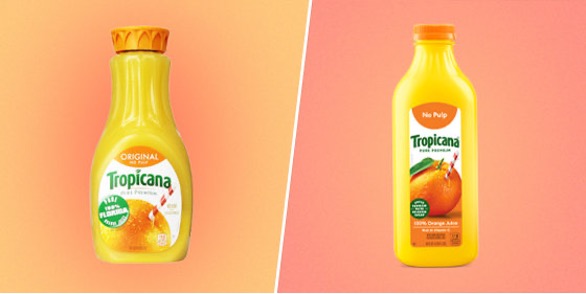
Orange you glad Tropicana gave everyone something to talk about this week by rolling the dice on another packaging change?
The scrapped carafe-shaped container certainly met Jenni Romaniuk’s distinctive asset criteria, which means a change this significant exposes the brand to the risk of being more difficult to locate at the point of sale. The result of not being easily found is, of course, being replaced by a competing salient brand that is. However, since the brand made only modest updates to the existing name mark, orange-with-straw, and other label elements, they’ll likely avoid a repeat of the 2009 calamity that resulted in precipitous sales decreases and ended with reverting to the previous carton after a few weeks.
If sales wind up recovering to normal levels after the expected initial drop and the new package saves a few cents per unit, this will wind up being a good business decision even though it isn’t the best decision from the marketing perspective. If sales don’t recover, expect to see the carafe make a triumphant return with the updated label.
Either way, we’ll all be adding a chapter to the Tropicana case study we assign students when we’re teaching distinctive assets.
I have some unsolicited advice for anyone working in marketing on the client side who’s responsible for oversight of programmatic media spend in any way: At the conclusion of every campaign, make your agency pull and present (1) a report that details a campaign’s reach against the total audience size used for the campaign, and (2) a frequency distribution report for the campaign alongside the frequency settings that were used to execute the buy.
You’ll learn a great deal about your agency’s competence and whether your dollars are being invested in ways that are aligned to the best effectiveness evidence that’s readily available from a number of reputable sources around LinkedIn and the Internet these days.
Unfortunately, most agencies aren’t especially good at executing programmatic buys. Instead of working to construct audience segments of the right kinds of people that are appropriately sized to the media budget, it’s common to see massively scaled, weakly- or un-targeted segments with no priority assigned to them. And instead of using well-reasoned minimum and maximum frequency settings, buyers regularly allow demand-side platforms to serve ads without much human guidance. Taken together, this too often results in a frequency of one exposure for 80+ percent of reached households for the entire campaign, which is typically four weeks or more.
In terms of both brand growth and advertising effectiveness, Binet, Sharp, and Ritson have consistently and compellingly in recent years demonstrated the need to prioritize reach, particularly among category buyers who don’t buy your brand; however, establishing and reinforcing brand links in consumers’ minds does require a level of repetition, so frequency shouldn’t be an afterthought.
Note that I’m not advocating audience segmentation schemes that resemble micro-targeting in any way. I’ve yet to see any credible research that would lead me to think it’s effective to chop a market into small segments in order to serve tailored creative to each of them. I’m sure someone can quote an exception or two, but as a rule, it’s best to use enough segmentation to help narrow delivery in a logical way without excluding people who will be in the market two or even three years in the future, budget allowing. Again, reaching people beyond your current customer base is the key to long-term brand growth.
Anyway, here are some (hopefully) useful guidelines to use as a check against poor programmatic planning:
For brand-focused campaigns, one ad per week is generally fine and for activation-focused campaigns, 2-3 ads per week is most effective.
For brand-focused campaigns, reach as many category buyers (including your brand buyers) as your budget will allow. Again, talk to everyone who buys the category if possible–Remember that most people don’t perceive huge differences between brands, so ad creative should be working to build awareness of distinct assets through emotional (i.e., System 1) appeals.
For activation-focused campaigns, target known brand buyers and people who are currently in-market to purchase. Here, creative may appeal more to reason/logic and convey helpful information about incentives, product attributes, and the like.
If you have data for your current buyers that can be used for marketing purposes, it can be employed to create lookalike (e.g., statistically similar) audience segments. By using information about your current buyers to help identify similar people who shop the category, your impressions can be better prioritized if you don’t have enough money to reach the entire category.
If you’re working to calculate a media budget during annual planning, make your agency partner size addressable media segments for your brand buyers and category buyers. Use these base figures in tandem with effective frequency levels to determine how many impressions you need to buy for a campaign and set the budget that way instead of using a historical or arbitrary figure.
I’ve decided to condense and share with the world (of my 15 or so readers) five lessons from my 2022 work journal, which, to be honest, sometimes seems more like a porthole (or portal) into the mind of a madman than a repository of useful professional knowledge. I think these were a couple rough gems during the past 12 months though.
1. On time management
One hour as the default meeting duration should immediately be terminated at all levels with extreme prejudice. A 15-minute standard seems best. Thirty minutes is the longest permissible duration but should only be employed if absolutely necessary.
This requires the person in charge of the meeting to be well prepared and ready to concisely communicate needs and directives while anticipating likely questions. This practice would save the equivalent of weeks or months of total time over the course of a year depending on an organization’s size. That’s valuable time that people can use to be productive doing actual work instead of attending unfocused meetings.
2. On paid media economies of scale
The primary difference between a $1 million paid digital media campaign that generates $150K-$200K of gross revenue and a $10 million campaign that generates about $1.5MM to $2MM of gross revenue is the amount of time it takes to input an extra ‘0’ into a DSP.
A competent, lean digital media buying team can generate significant revenue and profit only when an agency moves upstream to clients with large enough media budgets to produce economies of scale. A team working on two clients that spend $5 million each will always be more efficient, effective, and profitable than one that works on ten clients that spend $1 million each.
Moving upstream takes the focus and discipline not to waste time pursuing smaller, easier-to-win projects, but this seems to me the best way to achieve longer-term, more sustainable growth and stability for agencies. The added benefits of this method include less burnout and fewer costly mistakes made by overwhelmed media buyers.
3. On work from home policies
Are people more productive in the office than at home? I suppose some probably are. But plenty of others likely aren’t. The question of returning to the office has been divisive, fraught with uncertainty, and costly for a number of companies this year.
On-site attendance practices are, to some degree, a vestige of the Industrial Revolution which transitioned the economy from a task-oriented artisanal one into one of time-oriented mass production. For some jobs, of course, a time orientation remains necessary. But I’m not entirely certain that holds true for most marketing-related roles—many of which frequently extend well into traditional non-work hours—in the current economic environment.
At some point, the forces of WFH vs on-site will begin to exert themselves more visibly on the employment marketplace because it seems likely that the firms whose policies are more attractive to the most talented professionals will gain competitive advantage through finding and retaining people who offer superior human capital.
4. On the media planning and buying industry
I get hourly calls and emails from vendors promising magic beanstalks for audience segmentation, inventory access, attribution, omnichannel tracking, optimization, and god only knows what else. None of these marvels of technology seems to be any more effective overall than getting the fundamentals of a long-term strategy and tactical execution right.
In what I see as among the most significant research projects of the year, Meta published its findings related to effectiveness and made similar conclusions to those that have been long espoused by experts including Les Binet and Peter Field, Mark Ritson, and Byron Sharp.
Chief among those findings was Meta’s confirmation that top-of-funnel brand advertising continues to play a vital role in building long-term ROI and sales. This doesn’t mean that promotional-focused messaging, retargeting existing audiences, and data modeling have no role to play, but executing the basics turns out to be more important that trying to implement obscure keyword bidding strategies, cross channel measurement schemes, and micro-targeting systems. This comes as no surprise to people who have built successful brands over the long term.
5. On fake-it-till-you-make-it culture
Perhaps the sentencing of Elizabeth Holmes, continued failures of Elon Musk, and implosion of SBF and friends will continue to push the anti-intellectual fairy tale world of FITYMI toward its inevitable conclusion of being identified for what it actually is: a ruse.
Popular marketing-related social accounts and celebrity experts (e.g., Marketing Millennials and Gary Vaynerchuk) take every chance they find to shit on the value of education, and a legion of vacuous, non-curious “professional marketer” followers applaud from the sidelines while referring to themselves as rock stars, evangelists, and bosses.
I always enjoy pitching business against these people because honestly they don’t stand much of a chance against someone like me in a room full of smart people who make decisions in successful organizations. One cannot simply fake their way through conversations about complex, specialized concepts in any field, including marketing/advertising. Rather, it takes an actual expert that has acquired knowledge over the course of a career through intellectual curiosity, purposeful thinking, and education in its many forms.
Jen and I have been working on studying the feasibility of designing and opening a wine store based on a curated choice model that drastically limits the number of available SKUs compared to traditional bricks-and-mortar liquor stores, big box grocers, and online retailers. A limited choice model, of course, is not a concept we invented as major brands in many industries have made it work quite profitably (e.g., Raising Cane’s, Costco, and Trader Joe’s), but it’s not been tried much in the alcoholic beverage retail space as best as we can tell.
In the course of investigating, I turned up a pair of studies conducted in 2008 and 2014 that placed 20-25% of wine consumers into a category labeled Overwhelmed, which isn’t really all that surprising considering the sheer number of choices–and very little helpful information–made available to shoppers by retailers. Two other categories, Engaged Newcomers and Image Seekers have also emerged as potentially profitable segments to target by tapping into consumer trends such as in-person experiences and organic/natural selections. All told, these three segments make up half of the total wine market.
I suspect that another underlying factor driving a part of the anxiety in the Overwhelmed segment is that some of the individuals in it have migrated from lower socioeconomic status groups and did not grow up in households where wine was consumed. Prior research has found evidence of class-related anxiety associated with activities such as decorating a home to make it look “middle class” and there’s no reason to think it wouldn’t exist with choosing products like wine.
Considering that wine is a product that is generally regarded as more upscale and that often requires making complex choices about options that often come in packaging with difficult-to-pronouce names (for those of us who don’t also speak French, Italian, German, and Spanish), it’s no wonder that a fourth of the market feels overwhelmed. And since so few of us have the spare time to “learn wine” in order to make more informed choices (sounds like a great idea–maybe I’ll study wine after I learn how to bake, knit, and change my brakes), it seems certain that many people experience real anxiety when it comes time to choosing one. A store that offered fewer choices and communicated pertinent information (e.g., foods to pair, tasting notes, etc.) in a consistent, concise way would be a god-send for these shoppers.
This post would be incomplete if I didn’t pause here to mention the work of both Barry Schwartz (The Paradox of Choice) and Sheena Iyengar (The Art of Choosing), which should be on the shelves of all marketers. These works are necessary for understanding the problems with too much choice, including choice paralysis and decreased satisfaction. Both have been instrumental in shaping my views of inventory, operations, and communication strategy.
Undoubtedly, a market niche exists for a wine retailer that focuses a major part of its business on the Overwhelmed consumer segment. Whether or not such a store could sell enough bottles of a 40% (at best) gross margin product in a small Midwestern city to keep the lights on and make payroll is another question entirely.
From the time I started studying advertising as an undergraduate, one of the most prominent and consistent maxims I’ve encountered is that, for most brands, younger consumer segments are more valuable to advertisers than are older segments. The industry’s obsession with showing youthful faces and bodies as well as the parsing of the tween, teen, and young adult populations’ every whim lends at least some evidence to the idea that older segments just aren’t widely viewed as being desirable target audiences unless one is trying to sell adult diapers, shuffleboard supplies, or denture adhesives.
The rationale for a focus on younger consumers seems to stem, at least in part, from an assumption that older people have purchasing habits and brand affinities that are so established that it’s nearly impossible, or just too expensive, to change their preferences or interest them in new innovations.
I think a great many ad and marketing professionals still more or less accept this conventional wisdom, but when I recently ran across Alison Bryant’s work with AARP on what they’ve termed the Longevity Economy, I quickly realized they’re doing so at their own peril.
Bryant’s work encompasses a number of aspects, but her conclusions related to consumer activity are most relevant for those of us in the marketing space. One finding–that “56 cents of every dollar spent in the U.S. in 2018 was attributable to the 50-plus population”–was of particular interest. In a related podcast interview, Bryant discussed the need for marketers to connect with 50+ consumers by using imagery in ads that reflected the reality of older adults instead of relying on the same tired–and even insulting–cliches that many campaigns have continued to employ (see Gustafson and Popovich’s work on offensive stereotypes here, for example).
MIT’s AgeLab is also publishing exceptional research that can inform the entire marketing process–from product design and distribution to communication–for companies that are savvy enough to realize the consumer power that the 50+ segment represents. This brief lecture from AgeLab Director Joseph Coughlin gives a really nice overview of some Longevity Economy trends as well as some implications for business.
It’s apparent, then, that many marketers should be re-evaluating both the potential value of 50+ consumers and the ways in which those individuals should be approached through advertising. Considering the wealth and purchasing power this group controls, and the ability to deliver cost-effective digital ads to them, there’s simply no excuse to continue dismissing the value of older individuals as potential customers.
The implosion of the Richards Group–at one point the U.S.’s largest independent ad agency–as a result of its octogenarian founder’s critique that a proposed campaign for Motel 6 was “too black” will live in infamy alongside the Grey/Color Wheel and Campbell Ewald scandals that most people have long forgotten at this point.
The broad repudiation of Stan Richards’ racist words and the mass exodus of client accounts from his eponymous agency were warranted, but absent from the subsequent rush to cancel Richards and broadcast corporate platitudes about diversity and inclusion was any serious discussion about the systemic racism that forms the basis for executive attitudes about the business economics of black communities and black consumers in the U.S.
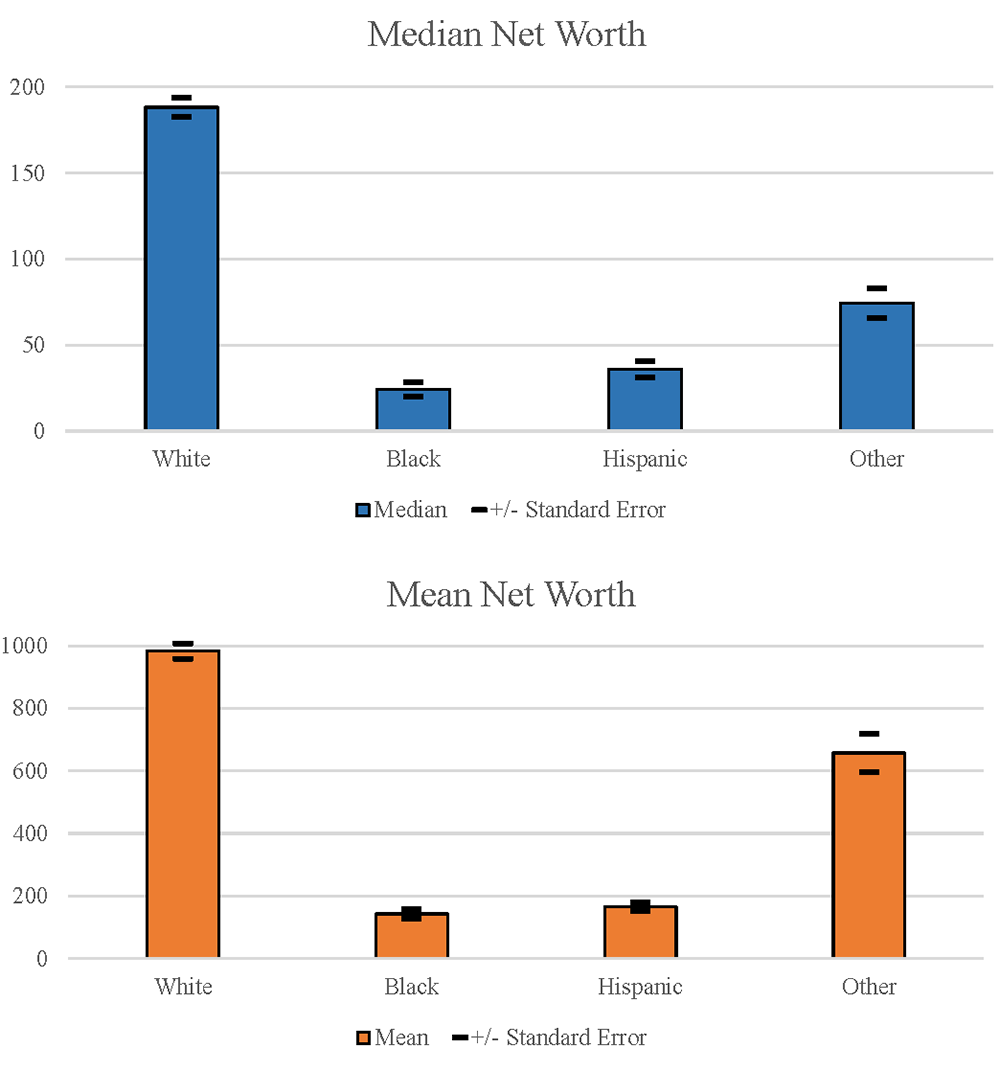
Data from the Federal Reserve starkly illustrates the vast disparity between the net worth (graphed below in 000s of dollars) that White families have compared to Black, Hispanic, and other ethnicity families in the U.S. It’s probably fair to assume that most wealthy white business executives know and understand this reality–most simply don’t have the audacity to verbalize its influence on their decision-making processes.
Until systemic racism and historical injustices have been fundamentally addressed in the U.S., no amount of cancel culture or heartfelt statements from corporate communication departments will have any impact on the harsh economic realities that average black families endure in this country. Featuring more diverse actors and models in positive representations in advertisements isn’t a bad thing–doing so can undoubtedly cultivate better attitudes and perceptions of minority individuals and communities, but without real policies that successfully address fairness in educational and employment opportunities and–ultimately–economic disparities, all the feel-good, diversity-inclusive ads in the world will make little difference to the financial conditions of Black families.
The topic of reparations tends to be a controversial subject for my students, which is why I often use it to initiate classroom discussions about economic equity. I tend to start with a question that asks students to agree or disagree that the descendants of wealthy families such as the Rockefellers, Vanderbilts, and Carnegies benefit from the vast wealth that their relatives built. Nearly all agree that they do. My next question–and the jumping off point for the discussion–is, “If those descendants still benefit from the conditions of their ancestors, how can we possibly think that the descendants of enslaved people don’t still suffer from the injustices inflicted upon theirs?” It’s a question we would all do well to reckon with if we hope to actually fix the problem of things in the U.S. being too black instead of just papering over it with kinder, more politically correct words.
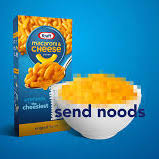
The crack marketing team over at Kraft Macaroni & Cheese made the brilliant decision to celebrate National Noodle Day on October 6 by creating a little promotion with the tagline “send noods” that was undoubtedly entertaining to at least three dozen half-drunken frat boys across the Midwest. I knew it was a bad idea that would require a corporate apology the second I saw it.
Niche brands targeted primarily at a young adult male market segment can often execute campaigns like this that capture attention and drive sales (e.g., Birddogs, Axe). But sophomoric, sex-related humor has no place promoting a brand that is targeted at a massive, diverse set of consumers and that many associate with childhood.
At minimum, two factors–the Me Too movement’s discussions around the tendency of some men to send unsolicited sexual images to women and parental worries about teenage boys’ proclivity for pressuring female classmates into sexting or to send explicit pictures of themselves (which are often shown to other classmates)–should have made someone at Kraft pull the plug early on this very bad idea. I’m amazed a responsible adult couldn’t be located anywhere in the Kraft Heinz marketing department on October 5 since I’m guessing there are some top notch people working there.
This dustup likely won’t have significant long-term consequences for KM&C. It’s an iconic brand that most people buy out of habit at the grocer. It doesn’t mean the company hasn’t at least temporarily alienated some of its customers though. All this, of course, could have been avoided by the simple exercise of considering what the brand’s core values are and determining whether or not a promotion that equates a bowl of macaroni with a dick pic is consistent with those values (it’s not).
There’s a part of me that wonders if this promotion got approved because of some kind of half-baked one-upmanship arms race between CPG marketing departments to prove they can be as unconventional and willing to take risks as their peers. Perhaps someone at Kraft read this Adweek report about Folgers Coffee from last month and decided “we’ll show them.” Good luck in your job search, Marketing Department guy.
I strongly dislike the negative feelings that I experience when throwing away food that’s gotten moldy, stale, or some other form of gross. My experience (and perhaps yours too) comports with Bolton and Alba‘s (2012) work on waste aversion, which explored this very common phenomenon that can affect the way purchase decisions are considered and made.
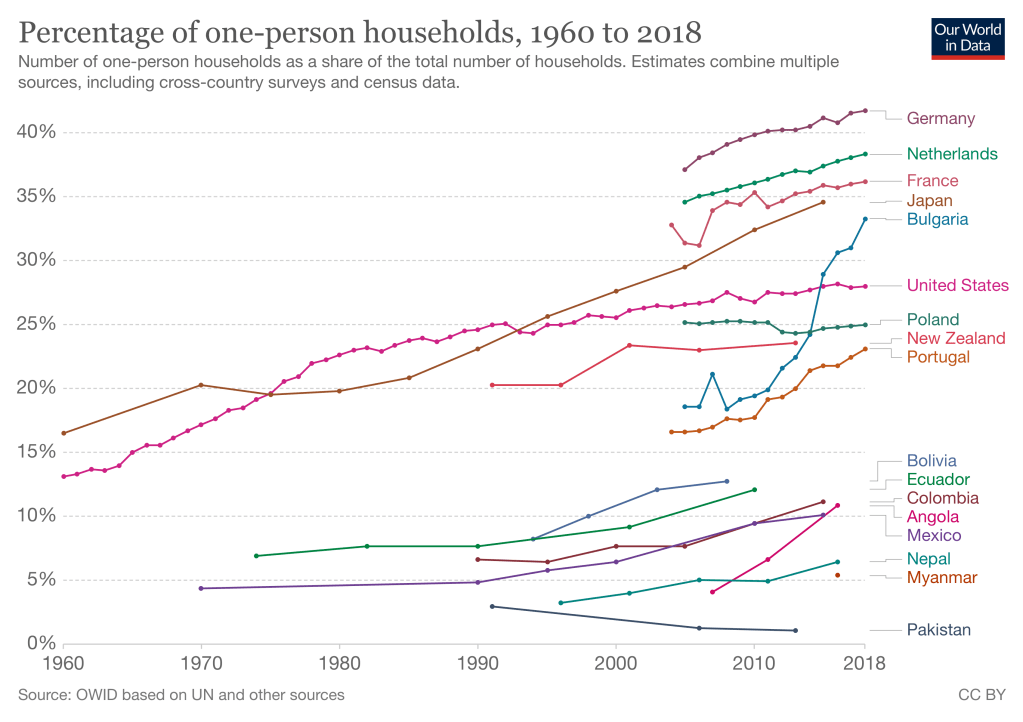
This problem is particularly pronounced in single-person households, which have been on the rise throughout the world, including in the U.S., where more than one-quarter of households are composed of one person. The trend toward living alone (which is interestingly counterintuitive to our evolutionary programming) has been somewhat well documented, including Eric Klinenberg’s book Going Solo: The Extraordinary Rise and Surprising Appeal of Living Alone and Steven Kurutz’s 2012 New York Times article “One is the Quirkiest Number,” among other works.
Savvy marketers, including Procter & Gamble, are paying attention to this trend and developing products and packaging to meet the needs of these often-affluent and often-urban consumers (see Ellen Byron’s story in the WSJ for examples and interviews). One of my favorite companies, Blue Bottle Coffee, has offered whole beans in a 6 oz “half bag” size for some time and it seems safe to assume that option was developed for single-person households, which likely make up a disproportionate amount of Blue Bottle’s customer base. Other companies have not been so wise about identifying and capitalizing on this trend, which may eventually be to their own detriment.
So what kinds of products should be created and/or packaged with the single-person household in mind? I don’t have enough motivation to try to come up with an exhaustive list, but it seems safe to assume that anything sold with a relatively-close expiration date should have a packaging option that aims to eliminate or drastically reduce waste. Similarly, premium products that rely on freshness–Blue Bottle’s high-end coffee, for example–should have some logic behind a quantity-to-time use ratio. To go back to the Blue Bottle example, six ounces of beans makes about seven cups of coffee at home–the perfect amount for a week’s supply. This package ensures that the customer always has fresh beans, which is vital for people who are willing to pay a premium for the roaster’s coffee varieties. It also has the happy side effect of bringing in the brick-and-mortar customers to a location, which creates opportunities to sell additional products.
Now that the social media feed and marketing algorithms have firmly identified me as an H-D fanboy, I see lots and lots of Harley content, including this trailer for Long Way Up, a Ewan McGregor motorcycle adventure series that will soon be available on Apple TV+. After a quick search, I learned that Long Way Up is a follow-up to two similar releases–2004’s Long Way Round and 2007’s Long Way Down–both of which featured BMW motorcycles.
Although I’ve not read any official reports that H-D paid for placement and/or donated motorcycles to the project, it seems safe enough to assume there’s some kind of contractual deal with interested parties since the film currently takes up prominent space on the Motor Company’s homepage (as of 9/20).
An exercise I frequently employ in advertising classes is deconstructing messages to analyze why a company has made certain decisions when creating a strategic message. If I was writing an academic paper (like I should be doing) instead of a blog to discuss this brand placement, I’d need at least a dozen pages to parse aspects such as the use of electric motorcycles, the depictions of various cultural practices, the use of celebrity endorsement, etc., etc. However, I don’t want to bore you to tears, so I’m only going to analyze what I think is the most interesting aspect of this particular narrative: experiencing friendship through motorcycle ownership.
John Cacioppo has extensively studied loneliness in the U.S. (see this excellent piece in The Atlantic), and has noted that about half of us lament not feeling enough actual connectedness with friends, despite perceptions that social media and smartphones have made us all more connected than ever. My guess is that H-D recognized an opportunity to show how people can cultivate human connections and real-life experiences on two wheels and did what it had to do in order to put McGregor and co-star Charley Boorman on Harleys instead of BMWs for this series.
Human beings are social animals that have evolved to solve problems through cooperative action. So our brains are wired to desire deep ties with other individuals because there’s a survival advantage to having friends, especially ones who can help us meet the challenges we face in life. I suspect that’s why much of the trailer for this series focuses on McGregor’s “doubts” about being able to undertake and complete the planned journey. It creates dramatic tension because it taps deeply into the human psyche. My guess is that those challenges will be met through friendship and connection throughout the series.
H-D is fighting battles on a number of fronts at this point, not least of which is trying to develop a consumer base for the future that is vastly different from its current core customers (I’m going to write more on this in the near future). Brand placement in a series that is essentially about a couple of nice, responsible guys doing a motorcycle adventure trip represents a pretty significant shift away from the narratives of the lone wolf, partying outlaw, or total asshole that has been used to represent H-D riders since the 1960s. Changing that image and attracting new customers will be a long, uneven task, but current social and economic forces dictate a need to continue looking for insights–like the need for real connection in a culture of lonely people–to ensure the company’s relevance.



 Justin Combs